Kamis, 13 November 2014

Download PDF Mathematical Analysis I (Universitext)By Vladimir A. Zorich

If puzzled on ways to obtain the book, you might not need to obtain perplexed any more. This web site is offered for you to assist whatever to locate the book. Because we have completed books from world authors from many nations, you necessity to obtain guide will be so easy right here. When this Mathematical Analysis I (Universitext)By Vladimir A. Zorich has the tendency to be the book that you need a lot, you could discover it in the link download. So, it's very simple then exactly how you get this publication without spending lot of times to browse as well as discover, experimentation in the book store.

Mathematical Analysis I (Universitext)By Vladimir A. Zorich

Mathematical Analysis I (Universitext)By Vladimir A. Zorich


Mathematical Analysis I (Universitext)By Vladimir A. Zorich


Download PDF Mathematical Analysis I (Universitext)By Vladimir A. Zorich

Just for you today! Discover your favourite book right below by downloading and install and also getting the soft file of guide Mathematical Analysis I (Universitext)By Vladimir A. Zorich This is not your time to generally likely to the e-book establishments to get a book. Right here, selections of e-book Mathematical Analysis I (Universitext)By Vladimir A. Zorich and also collections are readily available to download and install. Among them is this Mathematical Analysis I (Universitext)By Vladimir A. Zorich as your favored book. Obtaining this publication Mathematical Analysis I (Universitext)By Vladimir A. Zorich by on the internet in this website can be realized now by visiting the link web page to download and install. It will be easy. Why should be right here?

This book is one recommended book that can heal and deal with the time you have. Spare time is the best time to read a book. When there are no friends to talk with, this is better to utilize that time for reading. If you are being in the long waiting lists, this is also the perfect time to read or even being on an enjoyable trip. Mathematical Analysis I (Universitext)By Vladimir A. Zorich can be a good friend; of course this simple book will perform as good as you think about.

The Mathematical Analysis I (Universitext)By Vladimir A. Zorich as one of the advised products has actually been written in order to encourage the people life. It is real reality regarding just what to do and also exactly what took place. When someone inquires about something, you may not be so hard after obtaining several impacts and also lessons from reviewing books. One of them is this publication. Guide is advised one to be practical book sources.

You could find the web link that our company offer in site to download and install Mathematical Analysis I (Universitext)By Vladimir A. Zorich By buying the cost effective cost and also get completed downloading and install, you have actually completed to the first stage to get this Mathematical Analysis I (Universitext)By Vladimir A. Zorich It will be absolutely nothing when having actually acquired this publication as well as not do anything. Read it and also disclose it! Spend your couple of time to merely review some covers of web page of this publication Mathematical Analysis I (Universitext)By Vladimir A. Zorich to check out. It is soft data and simple to review anywhere you are. Appreciate your brand-new habit.

Mathematical Analysis I (Universitext)By Vladimir A. Zorich

This second English edition of a very popular two-volume work presents a thorough first course in analysis, leading from real numbers to such advanced topics as differential forms on manifolds; asymptotic methods; Fourier, Laplace, and Legendre transforms; elliptic functions; and distributions. Especially notable in this course are the clearly expressed orientation toward the natural sciences and the informal exploration of the essence and the roots of the basic concepts and theorems of calculus. Clarity of exposition is matched by a wealth of instructive exercises, problems, and fresh applications to areas seldom touched on in textbooks on real analysis.

The main difference between the second and first English editions is the addition of a series of appendices to each volume. There are six of them in the first volume and five in the second. The subjects of these appendices are diverse. They are meant to be useful to both students (in mathematics and physics) and teachers, who may be motivated by different goals. Some of the appendices are surveys, both prospective and retrospective. The final survey establishes important conceptual connections between analysis and other parts of mathematics.

The first volume constitutes a complete course in one-variable calculus along with the multivariable differential calculus elucidated in an up-to-date, clear manner, with a pleasant geometric and natural sciences flavor.

  • Sales Rank: #1388575 in Books
  • Published on: 2016-03-01
  • Original language: Russian
  • Number of items: 1
  • Dimensions: 9.21" h x 1.38" w x 6.14" l, .0 pounds
  • Binding: Hardcover
  • 616 pages

Review

“This is a thorough and easy-to-follow text for a beginning course in real analysis … . In coverage the book is slanted towards physics (mostly mechanics), and in particular there is a lot about line and surface integrals. … Will be popular with students because of the detailed explanations and the worked examples.” (Allen Stenger, MAA Reviews, maa.org, May, 2016)

From the Back Cover

VLADIMIR A. ZORICH is professor of mathematics at Moscow State University. His areas of specialization are analysis, conformal geometry, quasiconformal mappings, and mathematical aspects of thermodynamics. He solved the problem of global homeomorphism for space quasiconformal mappings. He holds a patent in the technology of mechanical engineering, and he is also known by his book Mathematical Analysis of Problems in the Natural Sciences .


This second English edition of a very popular two-volume work presents a thorough first course in analysis, leading from real numbers to such advanced topics as differential forms on manifolds; asymptotic methods; Fourier, Laplace, and Legendre transforms; elliptic functions; and distributions. Especially notable in this course are the clearly expressed orientation toward the natural sciences and the informal exploration of the essence and the roots of the basic concepts and theorems of calculus. Clarity of exposition is matched by a wealth of instructive exercises, problems, and fresh applications to areas seldom touched on in textbooks on real analysis.

The main difference between the second and first English editions is the addition of a series of appendices to each volume. There are six of them in the first volume and five in the second. The subjects of these appendices are diverse. They are meant to be useful to both students (in mathematics and physics) and teachers, who may be motivated by different goals.

Some of the appendices are surveys, both prospective and retrospective. The final survey establishes important conceptual connections between analysis and other parts of mathematics.

The first volume constitutes a complete course in one-variable calculus along with the multivariable differential calculus elucidated in an up-to-date, clear manner, with a pleasant geometric and natural sciences flavor.


“...Complete logical rigor of discussion...is combined with simplicity and completeness as well as with the development of the habit to work with real problems from natural sciences. ” From a review by A.N. Kolmogorov of the first Russian edition of this course

“...We see here not only a mathematical pattern, but also the way it works in the solution of nontrivial questions outside mathematics. ...The course is unusually rich in ideas and shows clearly the power of the ideas and methods of modern mathematics in the study of particular problems....In my opinion, this course is the best of the existing modern courses of analysis.” From a review by V.I.Arnold


About the Author
VLADIMIR A. ZORICH is professor of mathematics at Moscow State University. His areas of specialization are analysis, conformal geometry, quasiconformal mappings, and mathematical aspects of thermodynamics. He solved the problem of global homeomorphism for space quasiconformal mappings. He holds a patent in the technology of mechanical engineering, and he is also known by his book “Mathematical Analysis of Problems in the Natural Sciences”.

Mathematical Analysis I (Universitext)By Vladimir A. Zorich PDF
Mathematical Analysis I (Universitext)By Vladimir A. Zorich EPub
Mathematical Analysis I (Universitext)By Vladimir A. Zorich Doc
Mathematical Analysis I (Universitext)By Vladimir A. Zorich iBooks
Mathematical Analysis I (Universitext)By Vladimir A. Zorich rtf
Mathematical Analysis I (Universitext)By Vladimir A. Zorich Mobipocket
Mathematical Analysis I (Universitext)By Vladimir A. Zorich Kindle

Mathematical Analysis I (Universitext)By Vladimir A. Zorich PDF

Mathematical Analysis I (Universitext)By Vladimir A. Zorich PDF

Mathematical Analysis I (Universitext)By Vladimir A. Zorich PDF

Jumat, 07 November 2014

PDF Ebook xUnit Test Patterns: Refactoring Test CodeBy Gerard Meszaros

When reading this book regularly, you could get tired. But, you could make an excellent way by reading it little but also for sure. After a long time, you could lowly delight in the book reading quite possibly. By interest, you will have willing more than the others. This XUnit Test Patterns: Refactoring Test CodeBy Gerard Meszaros is available to offer in soft file and also printed. As well as below, just what we will certainly show you are the soft data of this boo.

xUnit Test Patterns: Refactoring Test CodeBy Gerard Meszaros

xUnit Test Patterns: Refactoring Test CodeBy Gerard Meszaros


xUnit Test Patterns: Refactoring Test CodeBy Gerard Meszaros


PDF Ebook xUnit Test Patterns: Refactoring Test CodeBy Gerard Meszaros

Currently welcome, the most motivating book today from a very expert author worldwide, XUnit Test Patterns: Refactoring Test CodeBy Gerard Meszaros This is the book that many individuals in the world awaiting to publish. After the announced of this book, the book fans are really interested to see exactly how this book is really. Are you one of them? That's very correct. You might not be remorse currently to seek for this book to read.

Reviewing is really a should as well as this is very important in this life. When someone reads whole lots, simply make manage your very own thought, just what regarding you? When will you start to check out lots? Many individuals always try to utilize their time [perfectly to read. A publication that ends up being analysis materials will certainly come to be buddies when they remain in lonesome. The XUnit Test Patterns: Refactoring Test CodeBy Gerard Meszaros that we have actually offered right here will certainly refer to the great means and referral that could set good life.

From the title, we will additionally show you the topic related to explain. When you actually need this sort of resource, why do not you take it currently? This book will not just provide you the understanding and lesson regarding the topic, from words that are used, it define new enjoyable thing. This XUnit Test Patterns: Refactoring Test CodeBy Gerard Meszaros will certainly make you feel no concern to invest more time in analysis.

From the explanation above, it is clear that you have to read this e-book XUnit Test Patterns: Refactoring Test CodeBy Gerard Meszaros We give the on the internet e-book entitled XUnit Test Patterns: Refactoring Test CodeBy Gerard Meszaros right below by clicking the link download. From discussed publication by on-line, you could offer much more perks for lots of people. Besides, the readers will be also effortlessly to obtain the favourite e-book XUnit Test Patterns: Refactoring Test CodeBy Gerard Meszaros to read. Find one of the most preferred and needed book XUnit Test Patterns: Refactoring Test CodeBy Gerard Meszaros to review now and also below.

xUnit Test Patterns: Refactoring Test CodeBy Gerard Meszaros

Automated testing is a cornerstone of agile development. An effective testing strategy will deliver new functionality more aggressively, accelerate user feedback, and improve quality. However, for many developers, creating effective automated tests is a unique and unfamiliar challenge.

xUnit Test Patterns is the definitive guide to writing automated tests using xUnit, the most popular unit testing framework in use today. Agile coach and test automation expert Gerard Meszaros describes 68 proven patterns for making tests easier to write, understand, and maintain. He then shows you how to make them more robust and repeatable--and far more cost-effective.

Loaded with information, this book feels like three books in one. The first part is a detailed tutorial on test automation that covers everything from test strategy to in-depth test coding. The second part, a catalog of 18 frequently encountered "test smells," provides trouble-shooting guidelines to help you determine the root cause of problems and the most applicable patterns. The third part contains detailed descriptions of each pattern, including refactoring instructions illustrated by extensive code samples in multiple programming languages.

Topics covered include

  • Writing better tests--and writing them faster
  • The four phases of automated tests: fixture setup, exercising the system under test, result verification, and fixture teardown
  • Improving test coverage by isolating software from its environment using Test Stubs and Mock Objects
  • Designing software for greater testability
  • Using test "smells" (including code smells, behavior smells, and project smells) to spot problems and know when and how to eliminate them
  • Refactoring tests for greater simplicity, robustness, and execution speed

This book will benefit developers, managers, and testers working with any agile or conventional development process, whether doing test-driven development or writing the tests last. While the patterns and smells are especially applicable to all members of the xUnit family, they also apply to next-generation behavior-driven development frameworks such as RSpec and JBehave and to other kinds of test automation tools, including recorded test tools and data-driven test tools such as Fit and FitNesse.

Visual Summary of the Pattern Language  Foreword Preface Acknowledgments Introduction Refactoring a Test PART I: The Narratives Chapter 1 A Brief Tour Chapter 2 Test Smells Chapter 3 Goals of Test Automation Chapter 4 Philosophy of Test Automation Chapter 5 Principles of Test Automation Chapter 6 Test Automation Strategy Chapter 7 xUnit Basics Chapter 8 Transient Fixture Management Chapter 9 Persistent Fixture Management Chapter 10 Result Verification Chapter 11 Using Test Doubles Chapter 12 Organizing Our Tests Chapter 13 Testing with Databases Chapter 14 A Roadmap to Effective Test Automation PART II: The Test Smells  Chapter 15 Code Smells Chapter 16 Behavior Smells Chapter 17 Project Smells PART III: The Patterns  Chapter 18 Test Strategy Patterns Chapter 19 xUnit Basics Patterns Chapter 20 Fixture Setup Patterns Chapter 21 Result Verification Patterns Chapter 22 Fixture Teardown Patterns Chapter 23 Test Double Patterns Chapter 24 Test Organization Patterns Chapter 25 Database Patterns Chapter 26 Design-for-Testability Patterns Chapter 27 Value Patterns PART IV: Appendixes Appendix A Test Refactorings   Appendix B xUnit Terminology  Appendix C xUnit Family Members Appendix D Tools Appendix E Goals and Principles Appendix F Smells, Aliases, and Causes Appendix G Patterns, Aliases, and Variations Glossary References  Index 

  • Amazon Sales Rank: #183468 in Books
  • Published on: 2007-05-31
  • Original language: English
  • Number of items: 1
  • Dimensions: 9.30" h x 2.30" w x 7.00" l, 3.65 pounds
  • Binding: Hardcover
  • 833 pages

From the Back Cover Automated testing is a cornerstone of agile development. An effective testing strategy will deliver new functionality more aggressively, accelerate user feedback, and improve quality. However, for many developers, creating effective automated tests is a unique and unfamiliar challenge."xUnit Test Patterns" is the definitive guide to writing automated tests using xUnit, the most popular unit testing framework in use today. Agile coach and test automation expert Gerard Meszaros describes 68 proven patterns for making tests easier to write, understand, and maintain. He then shows you how to make them more robust and repeatable--and far more cost-effective.Loaded with information, this book feels like three books in one. The first part is a detailed tutorial on test automation that covers everything from test strategy to in-depth test coding. The second part, a catalog of 18 frequently encountered "test smells," provides trouble-shooting guidelines to help you determine the root cause of problems and the most applicable patterns. The third part contains detailed descriptions of each pattern, including refactoring instructions illustrated by extensive code samples in multiple programming languages.Topics covered include Writing better tests--and writing them faster The four phases of automated tests: fixture setup, exercising the system under test, result verification, and fixture teardown Improving test coverage by isolating software from its environment using Test Stubs and Mock Objects Designing software for greater testability Using test "smells" (including code smells, behavior smells, and project smells) to spot problems and know when and how to eliminate them Refactoring tests for greater simplicity, robustness, and execution speedThis book will benefit developers, managers, and testers working with any agile or conventional development process, whether doing test-driven development or writing the tests last. While the patterns and smells are especially applicable to all members of the xUnit family, they also apply to next-generation behavior-driven development frameworks such as RSpec and JBehave and to other kinds of test automation tools, including recorded test tools and data-driven test tools such as Fit and FitNesse. "Visual Summary of the Pattern Language " " Foreword "" Preface "" Acknowledgments "" Introduction "" Refactoring a Test " PART I: The Narratives Chapter 1 A Brief Tour Chapter 2 Test Smells Chapter 3 Goals of Test Automation Chapter 4 Philosophy of Test Automation Chapter 5 Principles of Test Automation Chapter 6 Test Automation Strategy Chapter 7 xUnit Basics Chapter 8 Transient Fixture Management Chapter 9 Persistent Fixture Management Chapter 10 Result Verification Chapter 11 Using Test Doubles Chapter 12 Organizing Our Tests Chapter 13 Testing with Databases Chapter 14 A Roadmap to Effective Test Automation PART II: The Test Smells Chapter 15 Code Smells Chapter 16 Behavior Smells Chapter 17 Project Smells PART III: The Patterns Chapter 18 Test Strategy Patterns Chapter 19 xUnit Basics Patterns Chapter 20 Fixture Setup Patterns Chapter 21 Result Verification Patterns Chapter 22 Fixture Teardown Patterns Chapter 23 Test Double Patterns Chapter 24 Test Organization Patterns Chapter 25 Database Patterns Chapter 26 Design-for-Testability Patterns Chapter 27 Value Patterns PART IV: Appendixes Appendix A Test Refactorings Appendix B xUnit Terminology Appendix C xUnit Family Members Appendix D Tools Appendix E Goals and Principles Appendix F Smells, Aliases, and Causes Appendix G Patterns, Aliases, and Variations "Glossary "" References " " Index "

About the Author Gerard Meszaros is Chief Scientist and Senior Consultant at ClearStream Consulting, a Calgary-based consultancy specializing in agile development. He has more than a decade of experience with automated unit testing frameworks and is a leading expert in test automation patterns, refactoring of software and tests, and design for testability.

Excerpt. © Reprinted by permission. All rights reserved. The Value of Self-Testing Code

In Chapter 4 of Refactoring Ref, Martin Fowler writes:

If you look at how most programmers spend their time, you'll find that writing code is actually a small fraction. Some time is spent figuring out what ought to be going on, some time is spent designing, but most time is spent debugging. I'm sure every reader can remember long hours of debugging, often long into the night. Every programmer can tell a story of a bug that took a whole day (or more) to find. Fixing the bug is usually pretty quick, but finding it is a nightmare. And then when you do fix a bug, there's always a chance that anther one will appear and that you might not even notice it until much later. Then you spend ages finding that bug.

Some software is very difficult to test manually. In these cases, we are often forced into writing test programs.

I recall a project I was working on in 1996. My task was to build an event framework that would let client software register for an event and be notified when some other software raised that event (the Observer GOF pattern). I could not think of a way to test this framework without writing some sample client software. I had about 20 different scenarios I needed to test, so I coded up each scenario with the requisite number of observers, events, and event raisers. At first, I logged what was occurring in the console and scanned it manually. This scanning became very tedious very quickly.

Being quite lazy, I naturally looked for an easier way to perform this testing. For each test I populated a Dictionary indexed by the expected event and the expected receiver of it with the name of the receiver as the value. When a particular receiver was notified of the event, it looked in the Dictionary for the entry indexed by itself and the event it had just received. If this entry existed, the receiver removed the entry. If it didn't, the receiver added the entry with an error message saying it was an unexpected event notification.

After running all the tests, the test program merely looked in the Dictionary and printed out its contents if it was not empty. As a result, running all of my tests had a nearly zero cost. The tests either passed quietly or spewed a list of test failures. I had unwittingly discovered the concept of a Mock Object (page 544) and a Test Automation Framework (page 298) out of necessity!

My First XP Project

In late 1999, I attended the OOPSLA conference, where I picked up a copy of Kent Beck's new book, eXtreme Programming Explained XPE. I was used to doing iterative and incremental development and already believed in the value of automated unit testing, although I had not tried to apply it universally. I had a lot of respect for Kent, whom I had known since the first PLoP1 conference in 1994. For all these reasons, I decided that it was worth trying to apply eXtreme Programming on a ClearStream Consulting project. Shortly after OOPSLA, I was fortunate to come across a suitable project for trying out this development approach--namely, an add-on application that interacted with an existing database but had no user interface. The client was open to developing software in a different way.

We started doing eXtreme Programming "by the book" using pretty much all of the practices it recommended, including pair programming, collective ownership, and test-driven development. Of course, we encountered a few challenges in figuring out how to test some aspects of the behavior of the application, but we still managed to write tests for most of the code. Then, as the project progressed, I started to notice a disturbing trend: It was taking longer and longer to implement seemingly similar tasks.

I explained the problem to the developers and asked them to record on each task card how much time had been spent writing new tests, modifying existing tests, and writing the production code. Very quickly, a trend emerged. While the time spent writing new tests and writing the production code seemed to be staying more or less constant, the amount of time spent modifying existing tests was increasing and the developers' estimates were going up as a result. When a developer asked me to pair on a task and we spent 90% of the time modifying existing tests to accommodate a relatively minor change, I knew we had to change something, and soon!

When we analyzed the kinds of compile errors and test failures we were experiencing as we introduced the new functionality, we discovered that many of the tests were affected by changes to methods of the system under test (SUT). This came as no surprise, of course. What was surprising was that most of the impact was felt during the fixture setup part of the test and that the changes were not affecting the core logic of the tests.

This revelation was an important discovery because it showed us that we had the knowledge about how to create the objects of the SUT scattered across most of the tests. In other words, the tests knew too much about nonessential parts of the behavior of the SUT. I say "nonessential" because most of the affected tests did not care about how the objects in the fixture were created; they were interested in ensuring that those objects were in the correct state. Upon further examination, we found that many of the tests were creating identical or nearly identical objects in their test fixtures.

The obvious solution to this problem was to factor out this logic into a small set of Test Utility Methods (page 599). There were several variations:

  • When we had a bunch of tests that needed identical objects, we simply created a method that returned that kind of object ready to use. We now call these Creation Methods (page 415).
  • Some tests needed to specify different values for some attribute of the object. In these cases, we passed that attribute as a parameter to the Parameterized Creation Method (see Creation Method).
  • Some tests wanted to create a malformed object to ensure that the SUT would reject it. Writing a separate Parameterized Creation Method for each attribute cluttered the signature of our Test Helper (page 643), so we created a valid object and then replaced the value of the One Bad Attribute (see Derived Value on page 718).
We had discovered what would become2 our first test automation patterns.

Later, when tests started failing because the database did not like the fact that we were trying to insert another object with the same key that had a unique constraint, we added code to generate the unique key programmatically. We called this variant an Anonymous Creation Method (see Creation Method) to indicate the presence of this added behavior.

Identifying the problem that we now call a Fragile Test (page 239) was an important event on this project, and the subsequent definition of its solution patterns saved this project from possible failure. Without this discovery we would, at best, have abandoned the automated unit tests that we had already built. At worst, the tests would have reduced our productivity so much that we would have been unable to deliver on our commitments to the client. As it turned out, we were able to deliver what we had promised and with very good quality. Yes, the testers3 still found bugs in our code because we were definitely missing some tests. Introducing the changes needed to fix those bugs, once we had figured out what the missing tests needed to look like, was a relatively straightforward process, however.

We were hooked. Automated unit testing and test-driven development really did work, and we have been using them consistently ever since.

As we applied the practices and patterns on subsequent projects, we have run into new problems and challenges. In each case, we have "peeled the onion" to find the root cause and come up with ways to address it. As these techniques have matured, we have added them to our repertoire of techniques for automated unit testing.

We first described some of these patterns in a paper presented at XP2001. In discussions with other participants at that and subsequent conferences, we discovered that many of our peers were using the same or similar techniques. That elevated our methods from "practice" to "pattern" (a recurring solution to a recurring problem in a context). The first paper on test smells RTC was presented at the same conference, building on the concept of code smells first described in Ref.

My Motivation

I am a great believer in the value of automated unit testing. I practiced software development without it for the better part of two decades, and I know that my professional life is much better with it than without it. I believe that the xUnit framework and the automated tests it enables are among the truly great advances in software development. I find it very frustrating when I see companies trying to adopt automated unit testing but being unsuccessful because of a lack of key information and skills.

As a software development consultant with ClearStream Consulting, I see a lot of projects. Sometimes I am called in early on a project to help clients make sure they "do things right." More often than not, however, I am called in when things are already off the rails. As a result, I see a lot of "worst practices" that result in test smells. If I am lucky and I am called early enough, I can help the client recover from the mistakes. If not, the client will likely muddle through less than satisfied with how TDD and automated unit testing worked--and the word goes out that automated unit testing is a waste of time.

In hindsight, most of these mistakes and best practices are easily avoidable given the right knowledge at the right time. But how do you obtain that knowledge without making the mistakes for yourself? At the risk of sounding self-serving, hiring someone who has the knowledge is the most time-efficient way of learning any new practice or technology. According to Gerry Weinberg's "Law of Raspberry Jam" SoC,4 taking a course or reading a book is a much less effective (though less expensive) alternative. I hope that by writing down a lot of these mistakes and suggesting ways to avoid them, I can save you a lot of grief on your project, whether it is fully agile or just more agile than it has been in the past--the "Law of Raspberry Jam" not withstanding.

Who This Book Is For

I have written this book primarily for software developers (programmers, designers, and architects) who want to write better tests and for the managers and coaches who need to understand what the developers are doing and why the developers need to be cut enough slack so they can learn to do it even better! The focus here is on developer tests and customer tests that are automated using xUnit. In addition, some of the higher-level patterns apply to tests that are automated using technologies other than xUnit. Rick Mugridge and Ward Cunningham have written an excellent book on Fit FitB, and they advocate many of the same practices.

Developers will likely want to read the book from cover to cover, but they should focus on skimming the reference chapters rather than trying to read them word for word. The emphasis should be on getting an overall idea of which patterns exist and how they work. Developers can then return to a particular pattern when the need for it arises. The first few elements (up to and include the "When to Use It" section) of each pattern should provide this overview.

Managers and coaches might prefer to focus on reading Part I, The Narratives, and perhaps Part II, The Test Smells. They might also need to read Chapter 18, Test Strategy Patterns, as these are decisions they need to understand and provide support to the developers as they work their way through these patterns. At a minimum, managers should read Chapter 3, Goals of Test Automation.

1 The Pattern Languages of Programs conference.

2 Technically, they are not truly patterns until they have been discovered by three independent project teams.

3 The testing function is sometimes referred to as "Quality Assurance." This usage is, strictly speaking, incorrect.

4 The Law of Raspberry Jam: "The wider you spread it, the thinner it gets."

xUnit Test Patterns: Refactoring Test CodeBy Gerard Meszaros PDF
xUnit Test Patterns: Refactoring Test CodeBy Gerard Meszaros EPub
xUnit Test Patterns: Refactoring Test CodeBy Gerard Meszaros Doc
xUnit Test Patterns: Refactoring Test CodeBy Gerard Meszaros iBooks
xUnit Test Patterns: Refactoring Test CodeBy Gerard Meszaros rtf
xUnit Test Patterns: Refactoring Test CodeBy Gerard Meszaros Mobipocket
xUnit Test Patterns: Refactoring Test CodeBy Gerard Meszaros Kindle

xUnit Test Patterns: Refactoring Test CodeBy Gerard Meszaros PDF

xUnit Test Patterns: Refactoring Test CodeBy Gerard Meszaros PDF

xUnit Test Patterns: Refactoring Test CodeBy Gerard Meszaros PDF

Minggu, 26 Oktober 2014

Get Free Ebook Pediatric Nursing: An Introductory Text, 11eBy Debra L. Price MSN RN CPNP, Julie F. Gwin MN RN

Reviewing publications will not obligate you to complete it in a day. After your reading publication currently, Pediatric Nursing: An Introductory Text, 11eBy Debra L. Price MSN RN CPNP, Julie F. Gwin MN RN can be the chosen publication to be. We suggests because of the high quality of this publication. It showcases something new and also different. You could not have to believe substantially, but simply check out and also you will see why this publication is much advised.

Pediatric Nursing: An Introductory Text, 11eBy Debra L. Price MSN  RN  CPNP, Julie F. Gwin MN  RN

Pediatric Nursing: An Introductory Text, 11eBy Debra L. Price MSN RN CPNP, Julie F. Gwin MN RN


Pediatric Nursing: An Introductory Text, 11eBy Debra L. Price MSN  RN  CPNP, Julie F. Gwin MN  RN


Get Free Ebook Pediatric Nursing: An Introductory Text, 11eBy Debra L. Price MSN RN CPNP, Julie F. Gwin MN RN

One of the recommended and also famous books to have today is the Pediatric Nursing: An Introductory Text, 11eBy Debra L. Price MSN RN CPNP, Julie F. Gwin MN RN When you type the title of this book, everywhere, you will certainly get it as one of the leading noted book to check out. Also it is in the book shop, authors, or in some internet sites. But, when you are rally keen on the book, this is your ideal time to get as well as download right now and also right here with your web connection.

We recognize that everyone will require various book to check out. The demands will certainly depend on exactly how they deal with. When they need the resources from the other country, we will not let them feel so hard. We offer the books from abroad quickly based upon the soft data offered in web link lists. All publications that we give remain in very easy methods to link as well as obtain, as the Pediatric Nursing: An Introductory Text, 11eBy Debra L. Price MSN RN CPNP, Julie F. Gwin MN RN in soft documents in this site.

Reading a book could help you to open up the brand-new globe. From knowing nothing to recognizing every little thing can be reached when checking out publications sometimes. As many people state, a lot more publications you read, more things you would like to know, however couple of points you will certainly really feel. Yeah, reading the book will lead your mind to open minded as well as always aim to seek for the other understanding, even from lots of resources. Pediatric Nursing: An Introductory Text, 11eBy Debra L. Price MSN RN CPNP, Julie F. Gwin MN RN as a way of how guide is advised will certainly be available for you to get it.

By starting to read this book asap, you can conveniently locate the proper way making far better qualities. Utilize your leisure time to read this publication; even by pages you can take extra lessons and also motivations. It will not limit you in some events. It will certainly free you to constantly be with this publication every single time you will read it. Pediatric Nursing: An Introductory Text, 11eBy Debra L. Price MSN RN CPNP, Julie F. Gwin MN RN is now offered here and also be the initial to get it currently.

Pediatric Nursing: An Introductory Text, 11eBy Debra L. Price MSN  RN  CPNP, Julie F. Gwin MN  RN

Covering evidence-based pediatric nursing care from infancy through adolescence, Pediatric Nursing: An Introductory Text, 11th Edition provides a clear, easy-to-read guide to pediatric nursing for LPN/LVN students. Content in this edition is reorganized for a "best of both worlds" approach to pediatric nursing, with early chapters devoted to normal growth and development by age group followed by chapters covering the most common childhood disorders grouped by body system. Updated coverage reflects the latest issues in pediatric nursing care, including childhood obesity and teenage pregnancy. Clinical Snapshots and Nursing Care Plans with critical thinking questions show how to apply the nursing process in real patient care scenarios. Written by noted pediatric nursing educators Debra L. Price and Julie F. Gwin, this market-leading textbook provides the essential knowledge you need to succeed in LPN/LVN practice.

  • Reading Level: 9.6
  • Nursing Care Plans with critical thinking questions reinforce problem-solving skills as the nursing process is applied to pediatric nursing, with NEW critical thinking answer guidelines provided on the companion Evolve website Evolve to help you understand how a care plan is developed and how to evaluate care of a patient.
  • UNIQUE! Free, built-in Study Guide includes scenario-based clinical activities and practice questions for each chapter.
  • Complete, concise coverage of evidence-based pediatric nursing care includes cultural and spiritual influences, complementary and alternative therapies for pain management, and pediatric psychophysiologic responses to bioterrorism and threats of bioterrorism.
  • UNIQUE! Clinical Snapshots describe patient scenarios and include photographs of pediatric assessment and specific disorders, helping you apply critical thinking skills to clinical situations.
  • Did You Know boxes list assessment data to help you recognize possible pediatric disorders.
  • Nursing Brief boxes stress key points and help in prioritizing information.
  • Communication boxes offer tips and techniques for successful nurse-patient-family communication.
  • Health Promotion boxes and content highlight family-centered care, wellness, and illness prevention.
  • Home Care Considerations boxes address home care issues for children with chronic illnesses and congenital disorders as well as community-based care issues including immunization, nutrition, and overall health promotion.
  • UNIQUE! LPN Threads make learning easier, featuring an student-friendly reading level, key terms with phonetic pronunciations and text page references, chapter objectives, special features boxes, and full-color art, photographs, and design.
  • A reorganized structure provides a solid, logical foundation for learning, covering developmental stages first and then childhood diseases and disorders by body system.
  • Updated clinical content includes a focus on issues of childhood obesity and teenage pregnancy, the support and integration of children with genetic anomalies and physical disorders, and communication with pediatric patients and families.
  • Get Ready for the NCLEX®Examination! sections in every chapter include key points and NCLEX exam-style review questions.
  • Safety Alert! boxes highlight the 2011 Joint Commission National Patient Safety Goals, with special consideration for serious and potentially fatal medication errors.
  • Step-by-step nursing skills include a rationale for each step and easily recognizable icons for standard steps (e.g., hand hygiene).
  • UNIQUE! Icons in page margins point to related animations and video clips on the companion Evolve website.
  • Global Perspectives boxes highlight health issues impacting various part of the world.

  • Sales Rank: #473646 in Books
  • Published on: 2011-10-13
  • Original language: English
  • Number of items: 1
  • Dimensions: 10.80" h x .90" w x 8.50" l, 2.35 pounds
  • Binding: Paperback
  • 1072 pages

Pediatric Nursing: An Introductory Text, 11eBy Debra L. Price MSN RN CPNP, Julie F. Gwin MN RN PDF
Pediatric Nursing: An Introductory Text, 11eBy Debra L. Price MSN RN CPNP, Julie F. Gwin MN RN EPub
Pediatric Nursing: An Introductory Text, 11eBy Debra L. Price MSN RN CPNP, Julie F. Gwin MN RN Doc
Pediatric Nursing: An Introductory Text, 11eBy Debra L. Price MSN RN CPNP, Julie F. Gwin MN RN iBooks
Pediatric Nursing: An Introductory Text, 11eBy Debra L. Price MSN RN CPNP, Julie F. Gwin MN RN rtf
Pediatric Nursing: An Introductory Text, 11eBy Debra L. Price MSN RN CPNP, Julie F. Gwin MN RN Mobipocket
Pediatric Nursing: An Introductory Text, 11eBy Debra L. Price MSN RN CPNP, Julie F. Gwin MN RN Kindle

Pediatric Nursing: An Introductory Text, 11eBy Debra L. Price MSN RN CPNP, Julie F. Gwin MN RN PDF

Pediatric Nursing: An Introductory Text, 11eBy Debra L. Price MSN RN CPNP, Julie F. Gwin MN RN PDF

Pediatric Nursing: An Introductory Text, 11eBy Debra L. Price MSN RN CPNP, Julie F. Gwin MN RN PDF

Jumat, 17 Oktober 2014

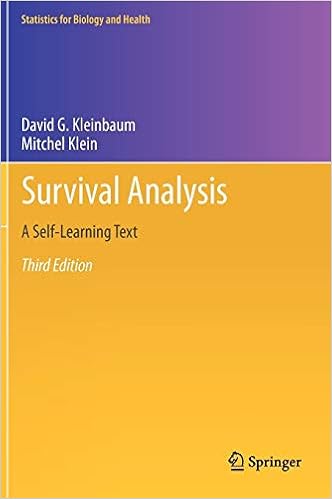
Download PDF Survival Analysis: A Self-Learning Text, Third Edition (Statistics for Biology and Health)

Currently, we need to inform you little thing about the information related to the Survival Analysis: A Self-Learning Text, Third Edition (Statistics For Biology And Health) When you truly have such certain time to prepare something or have the downtime to review a publication choose this. This is not only suggested for you. This is additionally suggested for all individuals on the planet. So, when you feel love in this publication, quicker get it or you will certainly be left of others. This is just what we will certainly tell to you regarding the factor you have to get it asap, just in this site.

Survival Analysis: A Self-Learning Text, Third Edition (Statistics for Biology and Health)

Survival Analysis: A Self-Learning Text, Third Edition (Statistics for Biology and Health)


Survival Analysis: A Self-Learning Text, Third Edition (Statistics for Biology and Health)


Download PDF Survival Analysis: A Self-Learning Text, Third Edition (Statistics for Biology and Health)

Have you detailed exactly what should you obtain today? Is there any type of plan and also concept to get the brand-new collection of publication? Well, if you have not that kind of strategy, we will influence you as well as make certain you to take it in listed. Publication is much suggested to be always in listing for you. It is kind of day-to-day requirement. So, when you allot much money for various other needs, you likewise should set aside some money to purchase guide.

If you ally need such a referred Survival Analysis: A Self-Learning Text, Third Edition (Statistics For Biology And Health) book that will offer you worth, obtain the very best vendor from us now from numerous preferred authors. If you wish to enjoyable books, lots of books, tale, jokes, as well as more fictions collections are also launched, from best seller to the most recent released. You may not be confused to appreciate all book collections Survival Analysis: A Self-Learning Text, Third Edition (Statistics For Biology And Health) that we will certainly give. It is not about the rates. It's about what you require currently. This Survival Analysis: A Self-Learning Text, Third Edition (Statistics For Biology And Health), as one of the most effective sellers here will be one of the appropriate selections to read.

Why we present this publication for you? We sure that this is exactly what you want to check out. This the appropriate book for your reading material this time lately. By discovering this book below, it proves that we constantly give you the proper publication that is needed among the society. Never ever doubt with the Survival Analysis: A Self-Learning Text, Third Edition (Statistics For Biology And Health) Why? You will not know just how this book is really before reviewing it till you finish.

By by doing this, you can be better to have spirit to read. The simple way to get, bring, and delight in reading of this publication is also developing when getting it in soft documents. By saving in some gadgets, you are most likely having more than a book. So, be sure that you download and install and also appreciate the Survival Analysis: A Self-Learning Text, Third Edition (Statistics For Biology And Health) to read. The link that we provide will assist you in eating the appropriate book there.

Survival Analysis: A Self-Learning Text, Third Edition (Statistics for Biology and Health)

Review

From the book reviews:“The authors present fundamental and basic ideas and methods of analysis of survival/event-history data from both applications and methodological points of view. … This book is clearly written and well structured for a graduate course as well as for practitioners and consulting statisticians. … There are many good examples in this edition, and more importantly, this new edition offers additional exercises, making it a good candidate for adoption as a textbook.” (Technometrics, August, 2012)"This text is … an elementary introduction to survival analysis. It is primarily intended for self-study, but it has also proven useful as a basic text in a standard classroom course … . Each chapter starts with an Introduction, an Abbreviated outline, and Objectives, and ends with self tests, exercises and a detailed outline. Solutions to tests and exercises are also provided." (Göran Broström, Zentralblatt MATH, Vol. 1093 (19), 2006)"The most meaningful accolade that I can give to this text is that it admirably lives up to its title." Journal of the American Statistical Association, September 2006"Imagine---a statistics textbook that actually explains things in English instead of explaining a topic by bombarding the reader with page-width equations requiring an advanced degree in Math just to read the book. If it weren't for this book, I would be really stuck." (David Britz)

Read more

From the Back Cover

This greatly expanded third edition of Survival Analysis- A Self-learning Text provides a highly readable description of state-of-the-art methods of analysis of survival/event-history data. This text is suitable for researchers and statisticians working in the medical and other life sciences as well as statisticians in academia who teach introductory and second-level courses on survival analysis. The third edition continues to use the unique "lecture-book" format of the first two editions with one new chapter, additional sections and clarifications to several chapters, and a revised computer appendix. The Computer Appendix, with step-by-step instructions for using the computer packages STATA, SAS, and SPSS, is expanded to include the software package R.David Kleinbaum is Professor of Epidemiology at the Rollins School of Public Health at Emory University, Atlanta, Georgia. Dr. Kleinbaum is internationally known for innovative textbooks and teaching on epidemiological methods, multiple linear regression, logistic regression, and survival analysis. He has provided extensive worldwide short-course training in over 150 short courses on statistical and epidemiological methods. He is also the author of ActivEpi (2002), an interactive computer-based instructional text on fundamentals of epidemiology, which has been used in a variety of educational environments including distance learning. Mitchel Klein is Research Assistant Professor with a joint appointment in the Department of Environmental and Occupational Health (EOH) and the Department of Epidemiology, also at the Rollins School of Public Health at Emory University. Dr. Klein is also co-author with Dr. Kleinbaum of the second edition of Logistic Regression- A Self-Learning Text (2002). He has regularly taught epidemiologic methods courses at Emory to graduate students in public health and in clinical medicine. He is responsible for the epidemiologic methods training of physicians enrolled in Emory’s Master of Science in Clinical Research Program, and has collaborated with Dr. Kleinbaum both nationally and internationally in teaching several short courses on various topics in epidemiologic methods.

Read more

See all Editorial Reviews

Product details

Series: Statistics for Biology and Health

Hardcover: 700 pages

Publisher: Springer; 3rd ed. 2012 edition (August 31, 2011)

Language: English

ISBN-10: 1441966455

ISBN-13: 978-1441966452

Product Dimensions:

7.4 x 1.8 x 10.2 inches

Shipping Weight: 3.4 pounds (View shipping rates and policies)

Average Customer Review:

4.2 out of 5 stars

29 customer reviews

Amazon Best Sellers Rank:

#570,903 in Books (See Top 100 in Books)

This is a very good gentle introduction to survival analysis ... which could be better. Its organization, with one column of text and a column of math/tables/figures on each page, makes it a pleasant read for people who want to learn the material but who do not learn well from math formulas. The column for math includes both straight forward algebra (for the folks who want to see worked problems) as well as fairly advanced formulas (for the others who can read calculus notation). The writing is exceptionally clear and the examples are perfect. The material covered includes the classic methods like Kaplan-Meier and Cox regression as well as more modern techniques like extended Cox with time dependent predictors and Fine and Gray competing risk methods.The book does have a major flaw. Its coverage of computer software is not good. There is an appendix that covers code but the code is incomplete and was out of date when it was published. There are many graphics and analyses in the body of the book that are not covered in the appendix. I teach with SAS so I can see many places where the authors failed to take advantage of methods that were in place when the book came out and their is no attempt to update the website to point out where the book is now badly out of date. For example the book clearly states that Fine and Gray analysis can't be done with off the shelf software (and SAS has been doing it since around 2013).So, this is a very good book that could be great if the authors would update it (or the website) to include the code to do all the graphics/analysis using modern software.

My relatively poor review compared to the others has to do with my expectations. My goal was to learn about survival analysis. I have some knowledge of things like multivariate regression, correlation coefficients, and chi squared analysis. I was hoping to learn about more sophisticated techniques.Instead, the book teaches how to use 3 or 4 computer programs that do these analyses. There is a difference. For example, Chapter 3 talks about the Cox proportional hazards model. It describes, in great detail, the input data and then shows the output given by one of the computer programs that the book uses. In pointing to one of the numbers from the output file, the authors say that it is "approximately a standard normal or Z variable. This Z statistic is known as a Wald Statistic, which is one of two test statistics typically used with ML estimates. The other test statistic, called the likelihood ratio makes use of the log likelihood statistic. The log likelihood statistic is obtained by multiplying the log likelihood in the computer output by -2. " My problem is that the book hasn't defined what a Z statistic is, or how maximum likelihood estimates are determined, and doesn't describe the significance of a log likelihood statistic. All we get is the formula to multiply one of the output values by -2 to get another value. We get no clue what this factor of -2 means.For me the bottom line is this. The book is very carefully written so that the reader will be able to run several statistical packages and get output files whose numbers can be understood. If that's what you want, this book is perfection itself. However, if you want to understand what those programs are actually doing, you'll need to go elsewhere.

This is a very lucidly written text. It justifies every word of the "Self Learning Text" concept. I have been following this as a textbook for my graduate course in survival analysis. This text lacks a bit in numerical derivations, but I think the author aims to skip difficult derivations in order to keep the essence of simpleness. In this text everything has been written in plain simple English and will serve as an excellent text for someone who is learning Survival for the first time and also for those relatively scared of hardcore mathematical statistics. I would highly recommend this book for learning the core concepts of survival data modelling.

Like other reviewers, I've scoured the bookstores looking for a good resource to provide a practical approach to conducting a survival analysis, and this book--hands down--is the best resource I have found yet. It is written in a very accessible style, and the formulas are written out in plain English so that you can intelligently communicate them to others. The chapters are well written, and each ends with practice questions that are extremely helpful.My only criticism is that the authors do not address the issue of discrete-time survival analysis, which is often necessary when the underlying hazard rates in your unit of time (e.g., day, week, month) exceeds .20 or so at any point. If you find yourself in that situation, then I would recommend the text by Singer and Willett (2003) Applied Longitudinal Data Analysis: Modeling Change and Event Occurrence. However, the Willett and Singer book is much more dense and difficult. If you don't have to worry with discrete-time analysis, then "Survival Analysis: A Self-Learning Text" is as close to 'one-stop-shopping' you can get.

Very good for self learning. Missing a little on proofs but you can find them on math.stackexchange.

I used this book along with an online course on the same topic by Statistics.com. The book is extremely user friendly, my background being that of a physician with knowledge of basic stats and regression analysis, not a background of mathematics or advanced statistics. Plus having worked out examples in the text using codes covering most of the commonly used stats program made it appropriate for a hands-on learning format that I prefer. Thus, it makes one confident to apply the techniques in future projects involving survival analysis.

This book is easy to read, yet will teach you a lot about survival analysis. The format with formulae off to the side and coding (SAS, Stata, R, etc) in an appendix provides all information needed without cluttering the main text. I definitely recommend this as a self-learning text or as a valuable way of reinforcing information for a course you're taking.

Survival Analysis: A Self-Learning Text, Third Edition (Statistics for Biology and Health) PDF
Survival Analysis: A Self-Learning Text, Third Edition (Statistics for Biology and Health) EPub
Survival Analysis: A Self-Learning Text, Third Edition (Statistics for Biology and Health) Doc
Survival Analysis: A Self-Learning Text, Third Edition (Statistics for Biology and Health) iBooks
Survival Analysis: A Self-Learning Text, Third Edition (Statistics for Biology and Health) rtf
Survival Analysis: A Self-Learning Text, Third Edition (Statistics for Biology and Health) Mobipocket
Survival Analysis: A Self-Learning Text, Third Edition (Statistics for Biology and Health) Kindle

Survival Analysis: A Self-Learning Text, Third Edition (Statistics for Biology and Health) PDF

Survival Analysis: A Self-Learning Text, Third Edition (Statistics for Biology and Health) PDF

Survival Analysis: A Self-Learning Text, Third Edition (Statistics for Biology and Health) PDF

Rabu, 17 September 2014

Free PDF The Satanic TestamentBy Lucifer LeGivorden

Make no mistake, this publication is really advised for you. Your inquisitiveness regarding this The Satanic TestamentBy Lucifer LeGivorden will certainly be addressed quicker when starting to read. Furthermore, when you finish this publication, you may not just resolve your interest but also find the true definition. Each sentence has an extremely wonderful significance and the selection of word is very unbelievable. The author of this book is really an amazing individual.

The Satanic TestamentBy Lucifer LeGivorden

The Satanic TestamentBy Lucifer LeGivorden


The Satanic TestamentBy Lucifer LeGivorden


Free PDF The Satanic TestamentBy Lucifer LeGivorden

Just how is your time to spend the leisure time in this day? Are you beginning to do a brand-new task? Will you attempt to check out? Everyone recognizes and also agrees that analysis is a great routine. You must read as well as review, in addition the book with many advantages. Yet, is that real? There are only few people that love to read. If you are among them, it is very good for you. We will certainly give you a new publication that could make your life improved to be better.

Not only from the nation, have individuals all over the world liked this publication a lot. They are the wonderful people, people that constantly have readiness and also spirit to review and also enhance their ability as well as understanding. Will you be among the? Definitely, when you are relay thinking about, you can be among the great individuals. This The Satanic TestamentBy Lucifer LeGivorden exists to attract you since it is so simple to comprehend. Yet, the definition is so deep. You can seem like dealing with as well as acting by yourself.

Now, how do you understand where to buy this book The Satanic TestamentBy Lucifer LeGivorden Never ever mind, now you might not visit guide establishment under the intense sunlight or evening to look the book The Satanic TestamentBy Lucifer LeGivorden We here consistently aid you to find hundreds kinds of publication. One of them is this publication qualified The Satanic TestamentBy Lucifer LeGivorden You may visit the link page offered in this collection then choose downloading. It will certainly not take more times. Simply hook up to your net access and you could access the e-book The Satanic TestamentBy Lucifer LeGivorden online. Of course, after downloading The Satanic TestamentBy Lucifer LeGivorden, you might not print it.

In fact, this is not a pressure for you to like this publication and also read till coating this publication. We show you the excellent book. It will certainly be so pity if you miss it. This is not the right time for you to miss out on the The Satanic TestamentBy Lucifer LeGivorden not to check out. It can aid you not only meeting this vacation times. After vacations, you will certainly obtain something brand-new. Yeah, this publication will truly lead you to life much better. This is why; this suggested book is much said for you who want to progress always.

The Satanic TestamentBy Lucifer LeGivorden

Written with class and style, LeGivorden strikes the hammer to the anvil with his first book. This testament to the shunned and feared religion is chalk block full of suprising twists and turns lending diobolical wisdom and insight to the diobolical tradition. LeGivorden expounds current on going trends while lending his own personal humor. From the Bad to the Good, LeGivorden weaves in his first attempt a masterpeace of wisdom, insight, and humor. He blasts wide open for the first time some of the secrets of Satanism that even the Satanic are shy about admitting, while bringing new thoughts and ideas to the table Here is some of what you will find. What are some of the bad elements in Satanism? How can Satanism grow and what is Trapizoidal Revisionism? Is there really sex durring Satanic Rites? How are Satanic Priests ordained? The answers will suprise you.

  • Sales Rank: #3848753 in Books
  • Published on: 2011-02-17
  • Original language: English
  • Dimensions: 8.26" h x .47" w x 5.83" l,
  • Binding: Paperback
  • 208 pages

The Satanic TestamentBy Lucifer LeGivorden PDF
The Satanic TestamentBy Lucifer LeGivorden EPub
The Satanic TestamentBy Lucifer LeGivorden Doc
The Satanic TestamentBy Lucifer LeGivorden iBooks
The Satanic TestamentBy Lucifer LeGivorden rtf
The Satanic TestamentBy Lucifer LeGivorden Mobipocket
The Satanic TestamentBy Lucifer LeGivorden Kindle

The Satanic TestamentBy Lucifer LeGivorden PDF

The Satanic TestamentBy Lucifer LeGivorden PDF

The Satanic TestamentBy Lucifer LeGivorden PDF

Rabu, 27 Agustus 2014

Free PDF Introduction to Political TheoryBy John Hoffman, Paul Graham

This is not kind of dull means and also task to read guide. This is not type of challenging time to enjoy reading publication. This is a great time to have a good time by checking out book. Besides, by reading Introduction To Political TheoryBy John Hoffman, Paul Graham, you could obtain the lessons and also experiences if you do not have any suggestions to do. As well as what you need to obtain currently is not type of difficult point. This is an extremely easy thing, only reading.

Introduction to Political TheoryBy John Hoffman, Paul Graham

Introduction to Political TheoryBy John Hoffman, Paul Graham


Introduction to Political TheoryBy John Hoffman, Paul Graham


Free PDF Introduction to Political TheoryBy John Hoffman, Paul Graham

Want to get experience? Want to get any ideas to create new things in your life? Read Introduction To Political TheoryBy John Hoffman, Paul Graham now! By reading this book as soon as possible, you can renew the situation to get the inspirations. Yeah, this way will lead you to always think more and more. In this case, this book will be always right for you. When you can observe more about the book, you will know why you need this.

This area is an online publication that you can find as well as take pleasure in lots of type of publication brochures. There will come several differences of how you discover Introduction To Political TheoryBy John Hoffman, Paul Graham in this site as well as off collection or guide stores. Yet, the major reason is that you may not go for lengthy moment to seek for guide. Yeah, you need to be smarter in this contemporary era. By sophisticated modern technology, the internet library as well as store is given.

The Introduction To Political TheoryBy John Hoffman, Paul Graham will certainly likewise plant you excellent way to reach your perfect. When it happens for you, you could read it in your extra time. Why don't you try it? Really, you will certainly not know how exactly this book will be, unless you review. Although you do not have much time to complete this book quickly, it in fact does not have to finish fast. Pick your precious spare time to make use of to read this publication.

The referred book with the basic creating design, easy to remember as well as understand, and available in this web site comes to be the minimally advantages to take. In the excellent way, delivering the expertise for others will certainly make you much better. Additionally, when you additionally enjoy reading this Introduction To Political TheoryBy John Hoffman, Paul Graham as one of the resources to collect, you can likewise discover the specific meaning of this publication.

Introduction to Political TheoryBy John Hoffman, Paul Graham

A completely new introduction to political theory that will grab students interest through it’s use of real-life examples.

  • Sales Rank: #2909559 in Books
  • Brand: Brand: Pearson
  • Published on: 2006-03-06
  • Original language: English
  • Number of items: 1
  • Dimensions: 9.68" h x 1.19" w x 7.47" l,
  • Binding: Paperback
  • 600 pages
Features
  • Used Book in Good Condition

Review

“A lucid and highly engaging introduction to political theory that is both comprehensive and accessible without being simplistic”

Laura Brace, LeicesterUniversity


“A ‘must’ for all students of politics and teachers of political theory. It offers a real feast of theory, covering all the bases, from the philosophical to the ideological and historical”

Jules Townshend, Manchester Metropolitan University

From the Back Cover

“A lucid and highly engaging introduction to political theory that is both comprehensive and accessible without being simplistic”

Laura Brace, LeicesterUniversity


“A ‘must’ for all students of politics and teachers of political theory. It offers a real feast of theory, covering all the bases, from the philosophical to the ideological and historical”

Jules Townshend, Manchester Metropolitan University

Introduction to Political Theory is a text for the 21st century.  It shows students why an understanding of theory is crucial to an understanding of political issues. Bringing together classical and contemporary political ideas and ideologies into one book, this new text introduces the major ideologies that have shaped the modern world and the ideas that form the currency of political debate.

 This comprehensive new text relates political ideas to political realities through effective use of examples and cases studies making political theory lively, contentious and relevant. A wide range of pedagogical features helps to clarify, extend and apply students’ understanding of the fundamental ideologies and concepts. This is comprised of:

·         Case studies demonstrate how political ideas, concepts and issues manifest in the real world

·         An innovative ‘How to Read’ feature helps students to get to grips with primary texts

·         ‘Ideas and Perspectives’ encourage students to appreciate alternative viewpoints

·         Biographies of key political figures provide a useful context to concepts and theories

·         A range of thought provoking photographs challenge students to examine concepts from a different angle

·         Suggestions for further reading and weblinks are also provided to help students to further their understanding

Introduction to Political Theory  is accompanied by an innovative website with Multiple Choice Questions, further case studies and links to political theory web resources

Professor John Hoffman lectures at LeicesterUniversity

Dr Paul Graham lectures at GlasgowUniversity

Aided by the use of ‘real life’ examples which bring classic as well as contemporary ideas to life, it conveys a real sense of intellectual excitement, challenge and relevance

Val Bryson, HuddersfieldUniversity


Introduction to Political TheoryBy John Hoffman, Paul Graham PDF
Introduction to Political TheoryBy John Hoffman, Paul Graham EPub
Introduction to Political TheoryBy John Hoffman, Paul Graham Doc
Introduction to Political TheoryBy John Hoffman, Paul Graham iBooks
Introduction to Political TheoryBy John Hoffman, Paul Graham rtf
Introduction to Political TheoryBy John Hoffman, Paul Graham Mobipocket
Introduction to Political TheoryBy John Hoffman, Paul Graham Kindle

Introduction to Political TheoryBy John Hoffman, Paul Graham PDF

Introduction to Political TheoryBy John Hoffman, Paul Graham PDF

Introduction to Political TheoryBy John Hoffman, Paul Graham PDF

Senin, 25 Agustus 2014

Ebook America: History of Our Nation: Beginnings Through 1877By PRENTICE HALL

We always devote to keep and also respect individuals needs of books. Books as a fantastic points to be resources in the world are always needed, anywhere and each time. When you have extra resources to take, books still hold the large powers. One of the effective books that we will proffer now is the America: History Of Our Nation: Beginnings Through 1877By PRENTICE HALL It is seemly a book that gives a various statement as others. When many individuals try to get this kind of publication with that fascinating topic, this publication comes disclosed for you.

America: History of Our Nation: Beginnings Through 1877By PRENTICE HALL

America: History of Our Nation: Beginnings Through 1877By PRENTICE HALL


America: History of Our Nation: Beginnings Through 1877By PRENTICE HALL


Ebook America: History of Our Nation: Beginnings Through 1877By PRENTICE HALL

America: History Of Our Nation: Beginnings Through 1877By PRENTICE HALL. Welcome to the best site that available hundreds sort of book collections. Right here, we will offer all books America: History Of Our Nation: Beginnings Through 1877By PRENTICE HALL that you need. Guides from well-known writers and also publishers are offered. So, you can delight in now to obtain one at a time type of publication America: History Of Our Nation: Beginnings Through 1877By PRENTICE HALL that you will certainly search. Well, pertaining to the book that you want, is this America: History Of Our Nation: Beginnings Through 1877By PRENTICE HALL your choice?

A publication is much related to reviewing activities. Book will certainly be nothing when none reviews it. Checking out will not be finished when the book is among the topics. Nonetheless, in this contemporary period, the presence of publication is expanding sophisticatedly. Many sources make the both publication in published as well as soft documents. Having the soft data of publication will relieve you to earn real to read it. It can be saved in your different tool, computer, CD, laptop computer, even the device that you always bring almost everywhere. It is why; we show you the soft documents of America: History Of Our Nation: Beginnings Through 1877By PRENTICE HALL as one of matter to read.

There is absolutely nothing to question t get this book as one of the discovering process to boost the understanding and impact. When you could admire of the writer and the book, you could feel relieved to review the book. As a book, America: History Of Our Nation: Beginnings Through 1877By PRENTICE HALL doesn't only end up being the reading product. It can be the buddy to be always there with you. When you have nothing to do, this book can be a fantastic different to make your time better.

To get exactly what you really want to make, reading this book can be accomplished each time you have opportunity to check out. Yeah, analysis is a must from everyone, not only when you are remaining in the university. Reviewing will certainly make you wiser as well as better in knowledge and lessons. Several experiences can be likewise acquired from reviewing just. So, be smart to get all those gain from America: History Of Our Nation: Beginnings Through 1877By PRENTICE HALL to read and also end up.

America: History of Our Nation: Beginnings Through 1877By PRENTICE HALL

This edition was developed specifically for courses covering up to the Civil War or Reconstruction.  The text can also be used for the first part of a two-year American history course.

  • Sales Rank: #735218 in Books
  • Brand: Prentice Hall
  • Published on: 2007-07-15
  • Ingredients: Example Ingredients
  • Format: CLV
  • Original language: English
  • Number of items: 1
  • Dimensions: 11.18" h x 1.19" w x 8.75" l,
  • Binding: Hardcover
  • 704 pages

America: History of Our Nation: Beginnings Through 1877By PRENTICE HALL PDF
America: History of Our Nation: Beginnings Through 1877By PRENTICE HALL EPub
America: History of Our Nation: Beginnings Through 1877By PRENTICE HALL Doc
America: History of Our Nation: Beginnings Through 1877By PRENTICE HALL iBooks
America: History of Our Nation: Beginnings Through 1877By PRENTICE HALL rtf
America: History of Our Nation: Beginnings Through 1877By PRENTICE HALL Mobipocket
America: History of Our Nation: Beginnings Through 1877By PRENTICE HALL Kindle

America: History of Our Nation: Beginnings Through 1877By PRENTICE HALL PDF

America: History of Our Nation: Beginnings Through 1877By PRENTICE HALL PDF

America: History of Our Nation: Beginnings Through 1877By PRENTICE HALL PDF

Categories

Unordered List

Sample Text

Blog Archive

Popular Posts

Recent Posts

Text Widget